Hi Chasers,
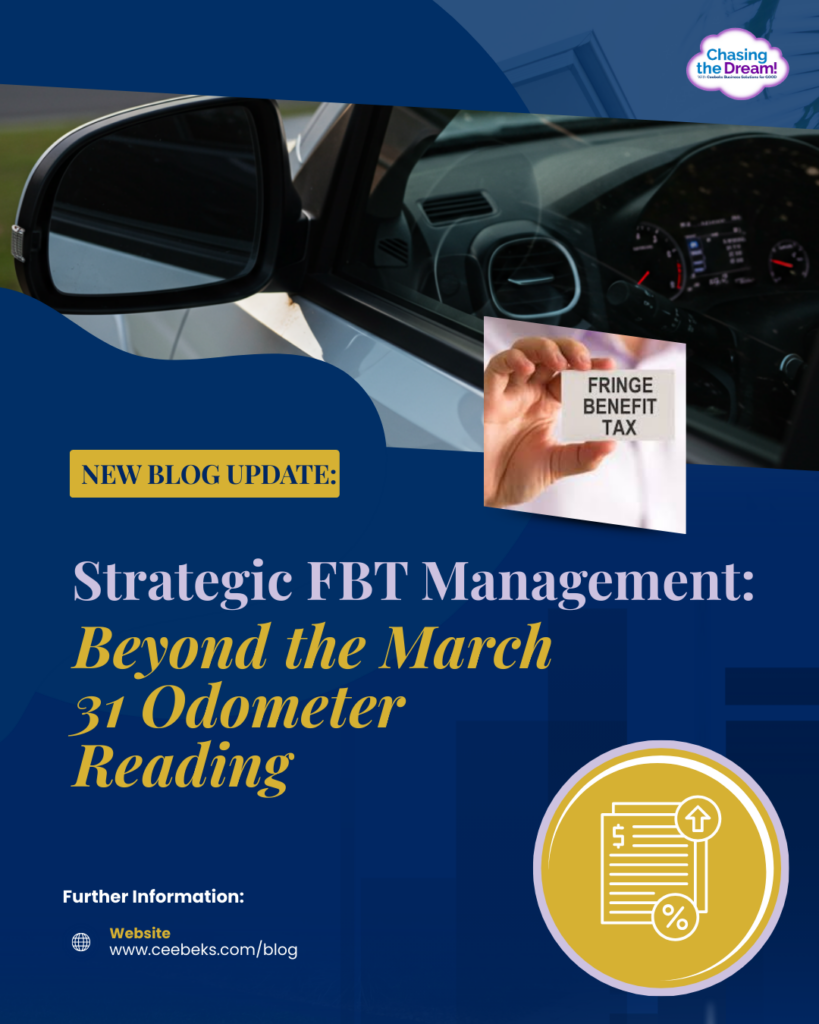
Fringe Benefits Tax (FBT) remains an important obligation for Australian employers. However, the 2026 FBT year introduces a key update for businesses providing employee vehicles. Speedometer readings are no longer required when calculating motor vehicle fringe benefits under the Statutory Formula Method.
This change removes one of the routine steps many employers completed each March. As a result, businesses can simplify parts of their FBT reporting process. However, odometer readings still play an important role in several compliance situations. Therefore, businesses should understand when vehicle records remain necessary.
Understanding the FBT Year for Australian Businesses
The Australian FBT year runs from 1 April to 31 March. During this period, employers must track fringe benefits provided to employees. Common benefits include company vehicles, expense reimbursements, entertainment, and lifestyle perks.
Motor vehicles remain one of the most common fringe benefits. Consequently, accurate vehicle records remain essential for FBT calculations and compliance reviews.
Historically, employers recorded odometer readings on March 31. These readings helped determine vehicle usage and support benefit calculations.
However, regulatory updates for the 2026 FBT year change how some vehicle benefits are assessed.
2026 FBT Update: Statutory Formula Method Simplified
For the 2026 FBT year, speedometer readings are no longer required when calculating car fringe benefits using the Statutory Formula Method.
This method applies a flat 20% rate to determine the taxable value of a vehicle benefit. Because the calculation no longer relies on travel distance, annual odometer readings are not required for this specific valuation method.
As a result, businesses using this approach can reduce routine administrative work. However, employers should still maintain accurate vehicle records when possible.
Odometer readings remain a valuable compliance safeguard. They also support future comparisons with other calculation methods.
Why Odometer Readings Are Still Recommended
Although the Statutory Formula Method no longer requires odometer data, maintaining readings remains a strong compliance practice.
Annual vehicle readings provide clear evidence during tax reviews or audits. Additionally, they allow businesses to compare calculation methods when evaluating FBT outcomes.
In many cases, the Operating Cost Method may produce a lower taxable value. However, this method requires detailed documentation.
Without odometer records, businesses lose the ability to perform accurate comparisons. Therefore, keeping vehicle readings remains a practical safeguard.
Operating Cost Method Still Requires Detailed Records
The Operating Cost Method, also known as the logbook method, continues to require strict documentation.
Under Sections 10A and 10B of the Fringe Benefits Tax Assessment Act, employers must record both annual odometer readings and trip-specific records.
These records support the calculation of business use percentages for the vehicle. Without them, the Australian Taxation Office may assume 0% business use.
This assumption significantly increases the taxable value of the benefit. Consequently, proper vehicle documentation remains essential for businesses using this method.
Vehicle Records and Exempt Commercial Vehicles
Vehicle records also support compliance rules for exempt commercial vehicles.
Certain work vehicles, such as utes and vans, may qualify for FBT exemptions. However, this exemption applies only when private use remains minor, infrequent, and irregular.
Odometer records help demonstrate this limited private use. Without supporting data, proving eligibility for the exemption becomes difficult.
Therefore, businesses providing commercial vehicles should continue recording vehicle usage where possible.
Electric and Hybrid Vehicle Reporting Considerations
Australia has introduced new tax concessions for employer-provided electric and hybrid vehicles.
One available shortcut allows electricity costs to be calculated using a 4.2 cents per kilometre rate. However, this method requires odometer readings to determine total distance travelled.
Without distance records, employers cannot apply this simplified calculation.
Consequently, vehicle readings remain essential when claiming this specific concession.
Why the March 31 Odometer Reading Still Matters
Although the statutory method no longer requires vehicle distance, the March 31 odometer reading remains a valuable compliance measure.
This annual record supports several important tax functions. It strengthens audit protection and supports valuation comparisons. Additionally, it helps demonstrate eligibility for certain tax concessions.
Physical or digital readings provide a clear reference point for vehicle use during the FBT year.
Therefore, many tax professionals still recommend recording odometer readings at the end of each FBT year.
Staying Compliant with Changing FBT Rules
FBT rules evolve regularly. Therefore, businesses should review vehicle policies and documentation practices each year.
Understanding the correct calculation method can reduce unnecessary tax costs. Additionally, accurate records help businesses respond confidently to tax reviews.
Employers should also ensure their accounting systems capture relevant benefit data throughout the year.
Strong documentation practices remain the best protection against unexpected FBT liabilities.
Need Help Navigating the 2026 FBT Changes?
Regulatory updates can create confusion for many businesses. However, understanding the rules ensures accurate reporting and reduced administrative burden.
If you are unsure how the 2026 vehicle reporting changes affect your FBT obligations, professional guidance can help clarify your options.
Speaking with a qualified tax advisor ensures your business applies the correct method and maintains proper documentation.
For tailored advice on managing fringe benefits and staying compliant, reach out to the Ceebeks team for guidance.
Have a great day!
Read more of our daily blogs for valuable insights and stay up-to-date with the latest industry news – click here to access the full article on our blog page.